
01
AI is making individuals faster — and teams more fragmented.
Everyone is building their own prompts, agents, shortcuts and workflows. But the work between people hasn't been redesigned.
Individual productivity ≠ organizational performance.
The organization isn't keeping up
Technology is moving faster than most organizations can redesign around it.
People leaders have a choice: react to that change — or design it.
Trusted by teams at






The cracks in the system
Everyone is building their own prompts, agents, shortcuts and workflows. But the work between people hasn't been redesigned.
Individual productivity ≠ organizational performance.
Business units are buying tools. Teams are building agents. Pilots are multiplying. Few organizations are redesigning roles, workflows, decision rights or measures of value around them.
More AI ≠ more ROI.
Tasks change first. Then roles. Then management expectations, career paths and the shape of the organization itself.
If People leaders don't design what comes next, someone else will.
Evidence
84%
of companies have not redesigned jobs, or the nature of work itself, around AI capabilities.
That's not just an AI gap. It's a work-design gap.
Deloitte, State of AI in the Enterprise, 2026 [source URL to be supplied]
2×+
Organizational factors are associated with more than twice the reported AI impact of individual factors.
67% organizational factors vs. 32% individual factors. Associated with, not proven to cause.
Microsoft, 2026 Work Trend Index [source URL to be supplied]
The shift
The Adaptive Operating System
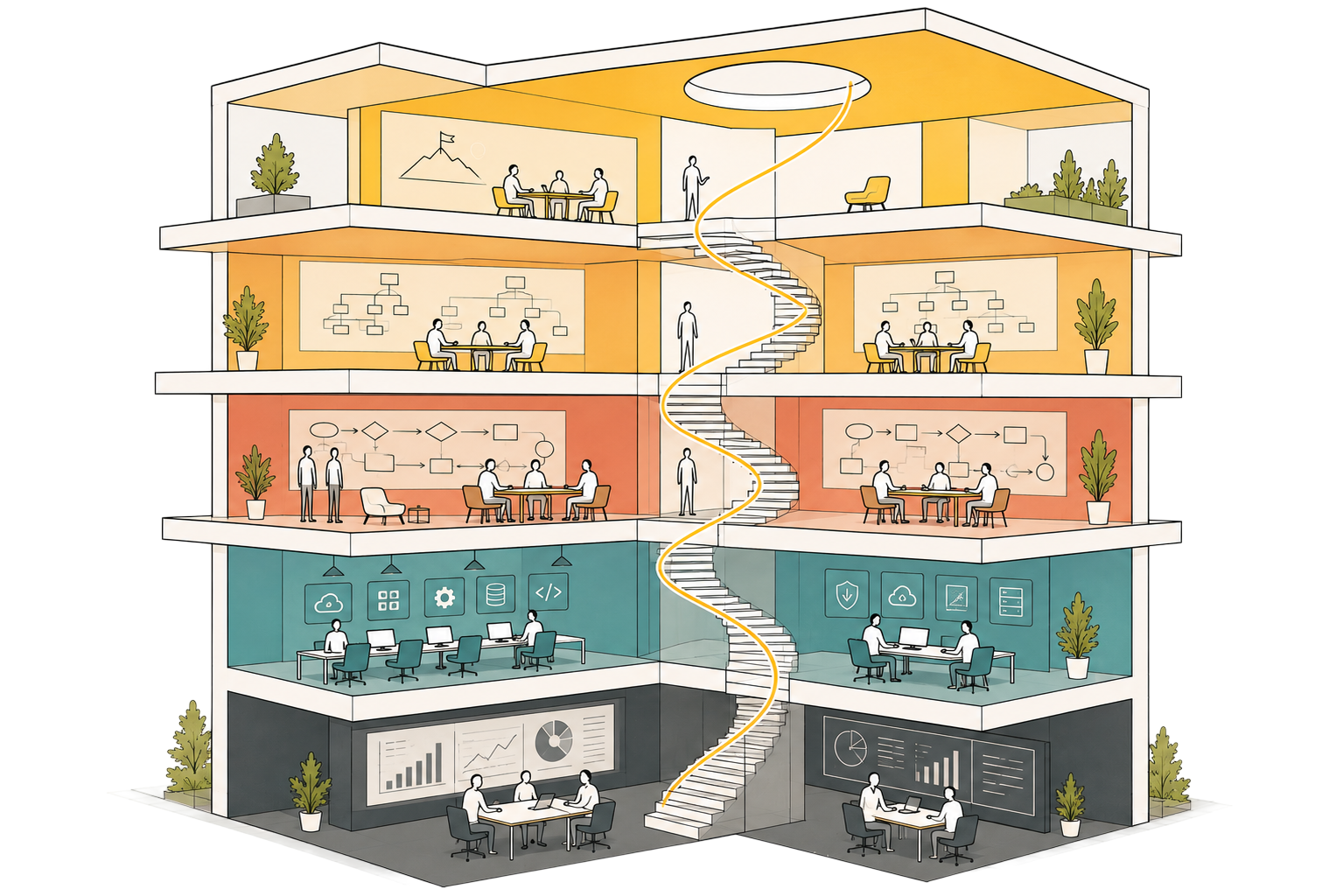
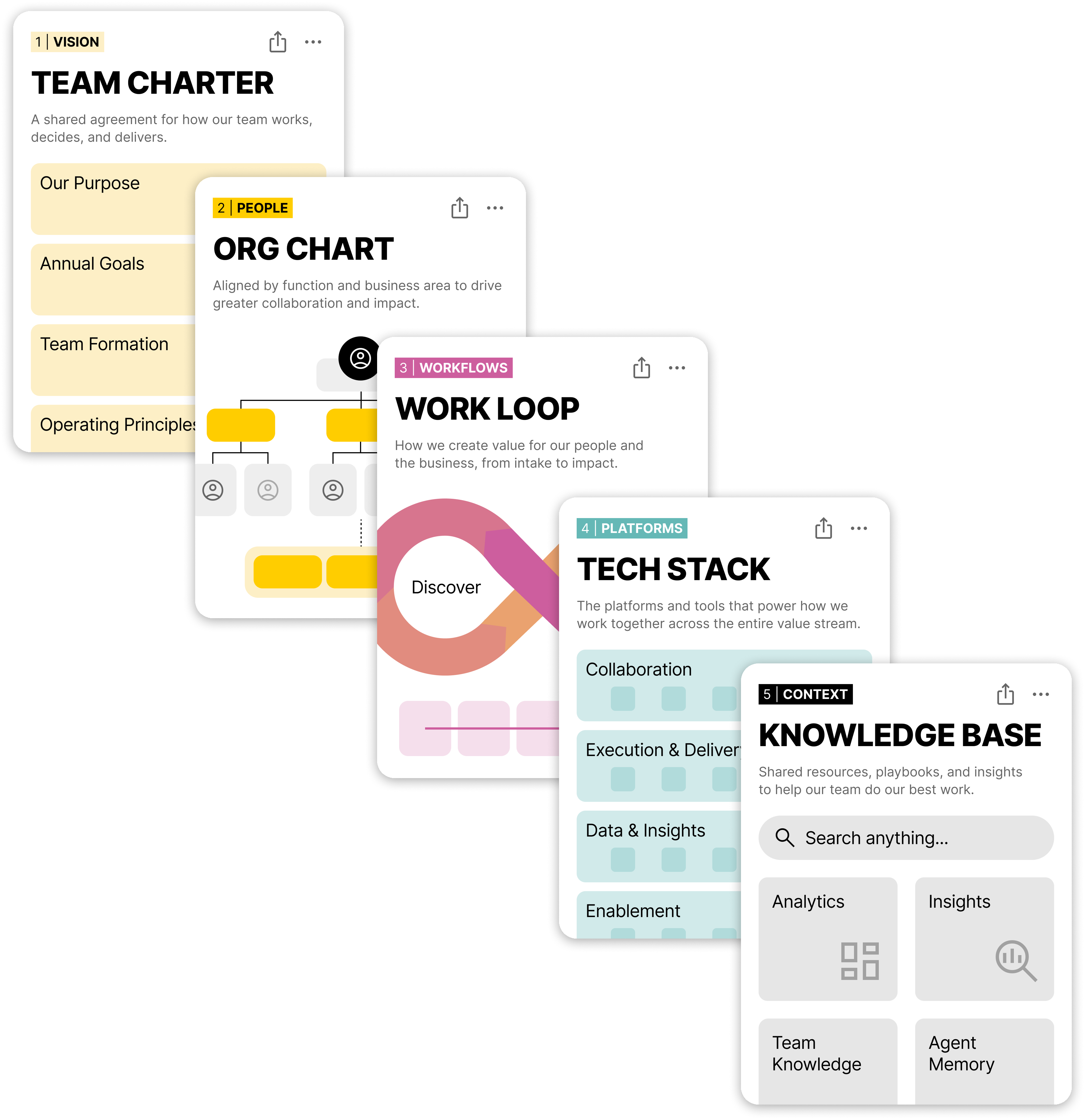
AOS is a practical system for redesigning how work actually happens — integrating strategy, people, workflows, context and technology from the start, not as an afterthought.
Explore the five layers
The strategy and direction of the team.
Where are we going, and what are we optimizing for?
AOS changes how the team actually runs.
How the team is structured to turn strategy into coordinated work.
Roles. Decision rights. Team formation. Human + agent ownership.
The loops that turn work into learning.
Weekly, monthly, quarterly and annual rhythms. Reviews. Retrospectives. Escalations. Course correction.
The tools teams use to run and evolve the system themselves.
Templates. Methods. Standards. Rituals. Practical tools.
What the work looks like
Clarify the vision and operating baseline.
Rebuild high-value workflows for how work should happen now.
Design the full system and transfer the capability to run it.
Placeholder — sanitized workflow, AI academy artifact, or facilitation image
AI + workflow transformation
A global organization needed to move AI from isolated experimentation toward practical use in how teams actually work.
Connected AI capability building to real roles, scenarios and workflows; created ways for leaders and teams to practice, apply and sustain new behaviors in the work itself.
Placeholder — approved sanitized outcome / evidence
Placeholder — decision-rights tool, team operating artifact, or workshop image
Decision-making + team agility
A fast-moving team needed to reduce consensus-driven decision-making and increase clarity around ownership, consulting behavior and execution.
Created clearer decision roles and practical operating tools that helped teams move with more autonomy while staying aligned.
Placeholder — approved sanitized outcome / evidence
Placeholder — journey map, research artifact, or frontline immersion image
People system + employee experience
A People team needed to shape a future employee experience grounded in the reality of frontline work rather than assumptions from headquarters.
Combined leadership alignment with immersive employee research, moments-that-matter mapping and a prioritized future-state People strategy.
Placeholder — approved sanitized outcome / evidence
Don't leave the future of work to your technology roadmap.
AI is already changing workflows, roles, decisions, management and organizational structure.
Use the Adaptive Operating System to redesign how people, teams and AI actually work together.